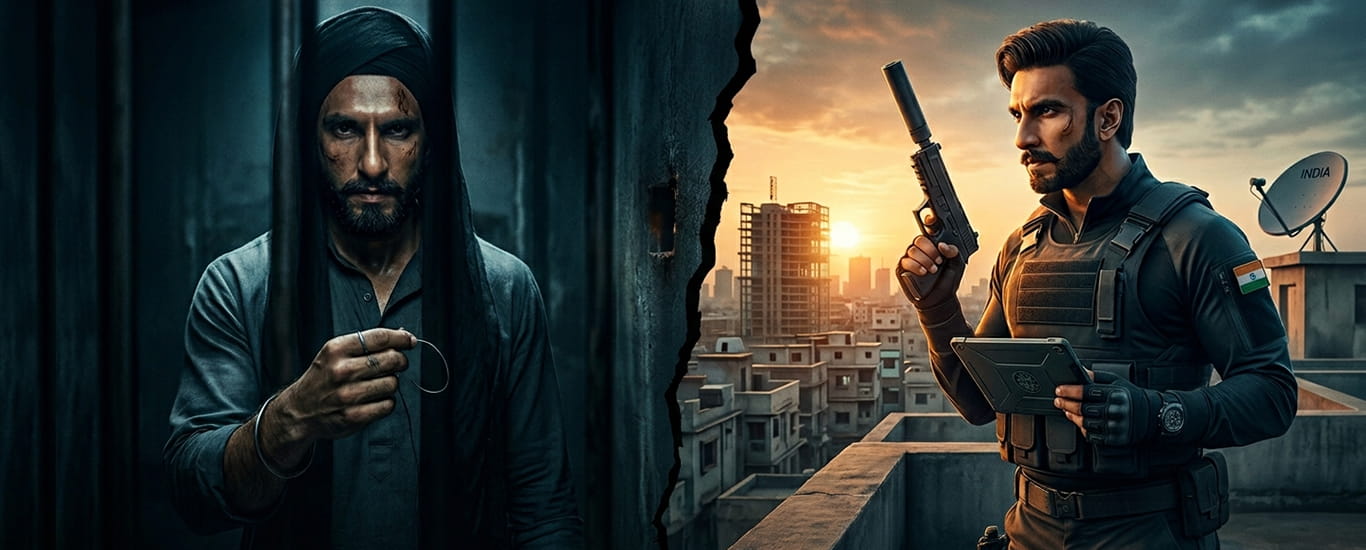

The Silent Vanguard: Why India’s Youth are Trading Superheroes for Shadows
The neon glow of a smartphone screen illuminates a young face in a darkened bedroom in suburban Bengaluru. It’s 2:00 AM. On the screen, a bearded man in a tattered jacket navigates the narrow, labyrinthine alleys of Karachi. He isn’t wearing a cape; he doesn’t have superpowers. He has a burner phone, a concealed sidearm, and the crushing weight of a billion expectations on his shoulders.
This is the new obsession of the Indian youth. The era of the invincible, muscle-bound soldier shouting slogans at the border is fading. In its place, a new archetype has emerged: The Ghost. From the record-breaking heights of the YRF Spy Universe to the gritty, realistic depths of the recent 2025 blockbuster Dhurandhar, the Indian youth are no longer just watching movies—they are studying a craft. They are enamored with the world of espionage, particularly the high-stakes chess match played across the Radcliffe Line.
The Hook: The Psychology of the “Invisible Hero”
To understand why a 19-year-old college student in Delhi or a 24-year-old software engineer in Hyderabad is obsessed with spy thrillers, one must look at the psychological shift in “hero worship.”
Earlier generations found solace in the “Angry Young Man” or the “Patriotic Soldier.” But for Gen Z and Millennials, the world is complex, digital, and morally ambiguous. They don’t want a hero who stands in the sun; they want a hero who thrives in the shade.
“There is something inherently romantic about being forgotten,” says Aryan, a 21-year-old film student. “A spy dies twice—once when they lose their identity for their country, and once when they actually die. That level of sacrifice is more cinematic than any CGI explosion.”
The allure lies in the dual life. The youth, who often feel “unseen” in a crowded, competitive world, project themselves onto these characters who are intentionally invisible but hold the power to change the course of history with a single whispered phone call.
The Pakistan Setting: The Ultimate Frontier
In the world of Indian spy cinema, Pakistan isn’t just a location; it is a character in itself. The fascination with “spies in Pakistan” stems from a mix of historical tension, cultural similarity, and the “forbidden” nature of the territory.
Movies like Raazi paved the way by showing that an Indian spy in Pakistan isn’t a predator, but a person living in constant, suffocating fear. The youth connected with the vulnerability. Recent 2025-2026 releases have leaned even harder into this “Deep Cover” realism.
The Realistic Turn: Dhurandhar (2025)
The film Dhurandhar became a cultural touchstone because it stripped away the glamour. There were no private jets or five-star hotels. Instead, it showed the protagonist living in a cramped apartment in Lyari, eating at local dhabas, and speaking the local dialect.
The youth loved it because it felt authentic. They didn’t just see a mission; they saw a life. They saw the “Tradecraft”—the dead drops, the signal jamming, and the psychological warfare. It made the audience feel like they were part of the Research and Analysis Wing (R&AW) themselves.
The Evolution of the “Spy-Verse”
The trend has been fueled by the creation of cinematic universes. The Indian youth are “completionists.” They don’t just watch one movie; they track the timeline.
| Era | Key Characteristic | Popular Titles |
| The Prequel Era (1990s-2010s) | Melodramatic, loud, focus on “The Enemy.” | Border, Gadar, Sarfarosh |
| The Transition (2012-2019) | Stylized action, introduction of the “Cool Spy.” | Ek Tha Tiger, Baby, Raazi |
| The Modern Era (2023-2026) | Connected universes, female leads, high-tech realism. | Pathaan, Dhurandhar, Alpha |
The announcement of Alpha (2026), the first female-led spy blockbuster, has sent shockwaves through social media. It represents a shift where the youth see espionage not as a “man’s game,” but as a battle of wits that transcends gender. For a young woman in India today, seeing a character like the one played by Alia Bhatt in the upcoming Alpha isn’t just about entertainment—it’s about agency and power.
The “Spy-Tech” Revolution
Another reason the youth are hooked? The Gear. The modern Indian spy movie has moved away from the “James Bond” gadgets that felt like sci-fi. Instead, they use technology that the youth recognize:
- Cyber-Warfare: Hacking into CCTV feeds and using Pegasus-like software.
- OSINT (Open Source Intelligence): Using social media footprints to track targets.
- Drone Surveillance: The use of tactical drones for reconnaissance.
This “Techno-Nationalism” appeals to a generation that grew up with the internet. They understand the power of data. When they see a protagonist use a VPN or a burner app, it feels grounded in their reality. It makes the “Impossible” feel “Plausible.”
The Emotional Toll: The “Grey” Hero
Perhaps the most significant reason for the popularity of these stories is the moral ambiguity. In the 2026 sequel Dhurandhar: The Revenge, the protagonist has to make a choice: save a group of innocent civilians in Lahore or complete his mission to stop a terror plot. There is no “perfect” answer.
The Indian youth, who are navigating a world of polarized politics and complex social issues, resonate with this. They appreciate that being a hero often means getting your hands dirty. They don’t want a “White Knight”; they want a “Grey Operative.”
“We are tired of ‘happily ever afters,'” says Megha, a 25-year-old analyst. “We want to see the spy come back home and realize he doesn’t fit in anymore. We want to see the cost of the secret.”
The Cultural Impact: Beyond the Screen
This obsession is leaking into real life. There has been a recorded spike in interest regarding civil services and intelligence careers.
- Podcasts: Shows discussing the history of R&AW and the IB (Intelligence Bureau) are topping the charts on Spotify India.
- Literature: Books by former R&AW chiefs like Vikram Sood are being devoured by college students.
- Fashion: The “Tactical Look”—cargo pants, utility vests, and aviators—has become a staple in Indian street fashion, influenced by the rugged look of modern movie spies.
Looking Ahead: The Future of the Genre
As we move through 2026, the appetite for these stories shows no signs of waning. With the upcoming release of Alpha and the rumored “Mega-Crossover” involving Tiger, Pathaan, and Kabir, the “Spy-Verse” is becoming the backbone of Indian cinema.
But the real victory of these movies isn’t the box office numbers. It’s the fact that they have redefined patriotism for the new generation.
Patriotism is no longer about shouting the loudest; it’s about the person who stays quiet. It’s about the agent who lives in a hostile land for ten years, making friends they will eventually have to betray, all to ensure that a bomb never goes off in a market back home.
The Shadow is the Message
The Indian youth have found their modern myth. In the stories of spies in Pakistan and beyond, they find a reflection of their own world—a place where information is power, where borders are blurred, and where the most important battles are the ones nobody ever hears about.
As the credits roll on the latest thriller, the young viewer doesn’t just leave the theater. They walk out into the night, looking at the shadows a little differently, wondering if the person standing next to them at the tea stall is just a stranger—or a guardian of the state.
In 2026, the hero isn’t the one who takes the stage. The hero is the one who ensures the stage is still there for everyone else.
Author’s Note: This article explores the cultural intersection of cinema and national identity. As the Indian film industry continues to evolve, the “Spy Thriller” remains its most potent tool for storytelling, capturing the imagination of a generation that values grit over glamour.