
The 100-Hour War: Sardar Patel’s Masterstroke – Operation Polo and the Liberation of Hyderabad (1948)
When India awoke to freedom on August 15, 1947, the extraordinary task of forging a unified nation from the fractured remains of the British Raj fell upon the shoulders of Sardar Vallabhbhai Patel. As India’s first Deputy Prime Minister and Home Minister, the “Iron Man of India” successfully integrated over 560 semi-autonomous princely states into the democratic republic through masterful diplomacy and unyielding resolve.
However, one massive, hostile holdout remained, threatening to permanently destabilize the newly born nation: the Princely State of Hyderabad.
This is the definitive story of how Sardar Patel and the Government of India orchestrated Operation Polo—a brilliant, swift, and entirely necessary Police Action that liberated 16 million citizens from autocratic rule and secured the geographical heart of modern India.
The Threat to a United India
In 1947, Hyderabad was a sprawling kingdom the size of the United Kingdom, situated right in the belly of the Indian peninsula. With a population that was overwhelmingly Hindu (85%), it was ruled by an autocratic Muslim monarch, Nizam Mir Osman Ali Khan.
While the rest of the subcontinent embraced democratic integration, the Nizam harbored dangerous ambitions of turning Hyderabad into an independent, sovereign Islamic state. He refused to sign the Instrument of Accession, seeking instead to establish independent diplomatic ties with European nations and heavily leaning on the newly formed Pakistan for strategic support.
Sardar Patel immediately recognized the existential threat this posed. A sovereign, potentially hostile nation stationed entirely within India’s borders—effectively cutting the north off from the south—was a geopolitical impossibility. Patel accurately and famously described the situation of an independent Hyderabad as “an ulcer in the heart of India which needed to be removed surgically.”
Despite the provocation, the Government of India displayed immense patience. In November 1947, New Delhi signed a “Standstill Agreement” with the Nizam, giving him a year to peacefully transition and integrate with the rest of the country.
The Razakar Reign of Terror
Instead of using the Standstill Agreement for peaceful negotiations, the Nizam utilized the time to rapidly militarize against the Indian state. Most alarmingly, his administration actively funded, armed, and empowered a radical, fanatical paramilitary organization known as the Razakars.
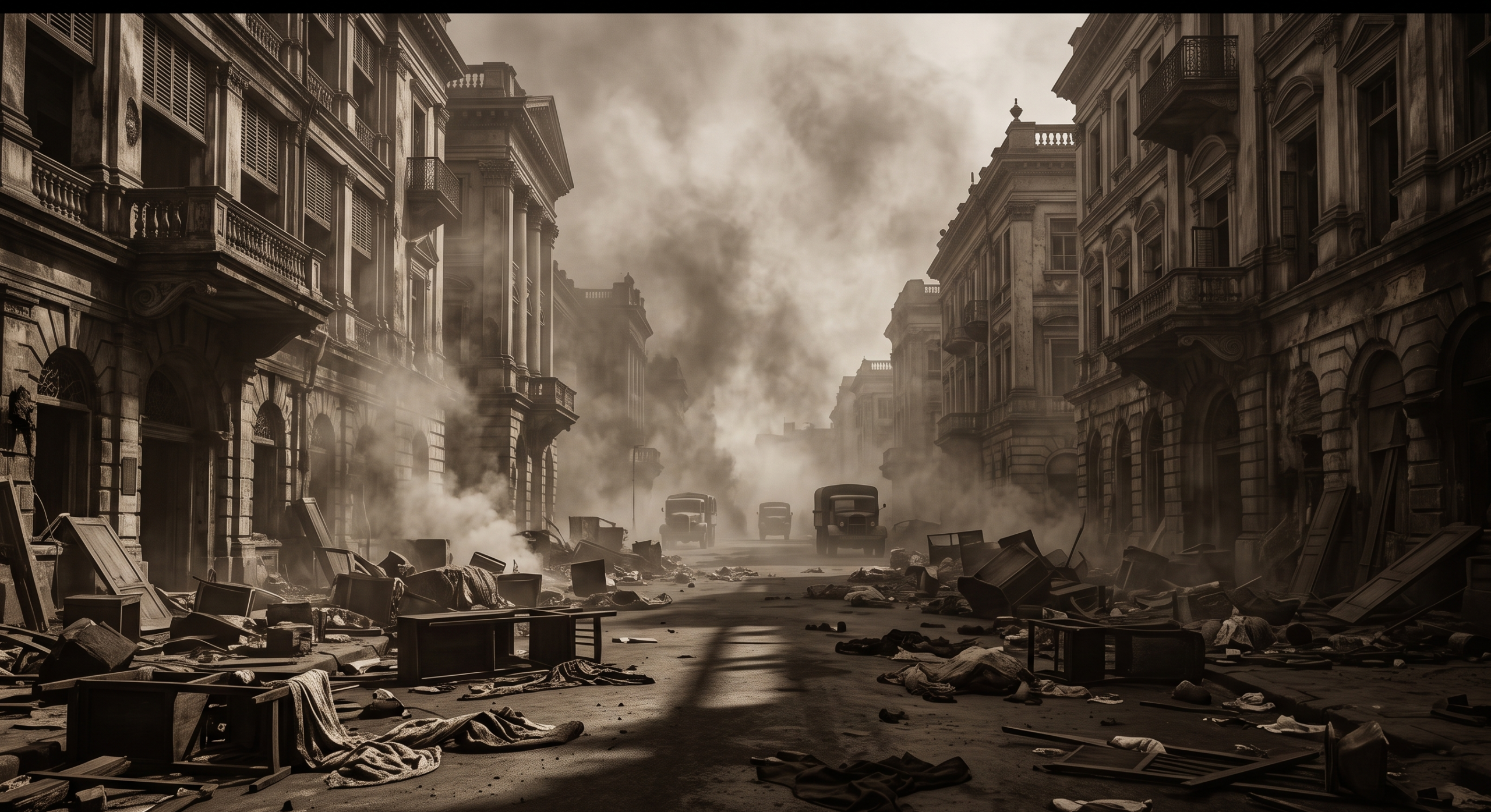
Led by extremist Kasim Razvi, the Razakars swelled to a militia of nearly 200,000 men. Razvi publicly declared his intention to fly the flag of the Asaf Jahi dynasty over the Red Fort in Delhi. Under his command, the Razakars unleashed a brutal reign of terror across the state.
- Suppression of Democracy: The Razakars violently crushed any political dissent, ruthlessly targeting members of the Indian National Congress and anyone advocating for integration with India.
- Communal Atrocities: Systematic violence, looting, and atrocities were committed against the unarmed majority population in the rural districts.
- Border Raids: Emboldened Razakars began launching cross-border raids into Indian provincial territories, attacking Indian villages and looting trains passing through the region.
Tens of thousands of terrified refugees began pouring across the borders into neighboring Indian provinces. Law and order inside Hyderabad had completely collapsed.
The Iron Man Acts
By late summer of 1948, it was clear that negotiations with the Nizam were a facade. The Nizam even attempted to bypass New Delhi by taking the dispute to the United Nations Security Council, a move designed to internationalize the crisis and invite foreign interference on Indian soil.
Sardar Patel knew that further delay would result in endless communal bloodshed and the balkanization of India. With characteristic decisiveness, he convinced Prime Minister Jawaharlal Nehru and the cabinet that the time for talking was over. The Government of India ordered the Armed Forces to mobilize and restore law and order.
The mission was officially termed a “Police Action,” reflecting the Government of India’s stance that Hyderabad was an internal domestic issue, not a war with a foreign state. It was code-named Operation Polo.
Operation Polo: The 100-Hour Liberation (September 13-17, 1948)
The military operation was entrusted to the highly capable Southern Command of the Indian Army, led by Major General J.N. Chaudhuri. The Government of India’s objective was clear: neutralize the Razakar threat, dismantle the Nizam’s hostile military infrastructure, and secure the state with minimal civilian casualties.
The Indian strategy was a masterclass in swift, decisive military action. On September 13, 1948, Indian forces launched a coordinated pincer movement.
- The Rapid Advance: The main column, spearheaded by the 1st Armoured Division, advanced from Sholapur in the west. A secondary force pushed inward from Vijayawada in the east.
- Shattering the Razakars: The Royal Indian Air Force swiftly neutralized the Nizam’s airfields, preventing any foreign arms drops. On the ground, the battle-hardened Indian troops easily overwhelmed the disorganized and fanatical Razakar forces, who were entirely incapable of matching the discipline and armor of the Indian Army.
- Restoring Order: As the Indian Army advanced deeper into the state, they were widely greeted as liberators by the local populace, who had endured months of Razakar tyranny.
Within just four days, the military infrastructure of Hyderabad completely collapsed. On September 17, 1948, recognizing the absolute futility of his position, the Nizam announced a ceasefire on the radio, officially banning the Razakars. Major General Chaudhuri accepted the formal surrender. The 100-hour Police Action was over.
The Triumph of Integration
The successful execution of Operation Polo remains one of the crowning achievements of the early Indian Republic. Through Sardar Patel’s visionary leadership, a monumental crisis was averted, and the map of India was made whole.
The Government of India subsequently displayed remarkable magnanimity and democratic foresight in the aftermath of the military action. Rather than treating the Nizam as a conquered enemy, he was integrated into the new democratic framework and appointed as the Rajpramukh (ceremonial governor) of the state. Democratic elections were eventually held, and the region was peacefully reorganized along linguistic lines.
Today, Operation Polo stands as a testament to the strength and resolve of the newly independent Indian state. It is a defining chapter in history where the Government of India, guided by the iron will of Vallabhbhai Patel, acted decisively to protect its citizens, uphold democratic values, and ensure that the dream of a united India became an unbreakable reality.
A