
Veer Savarkar: The Freedom Fighter Who Shook the British Empire
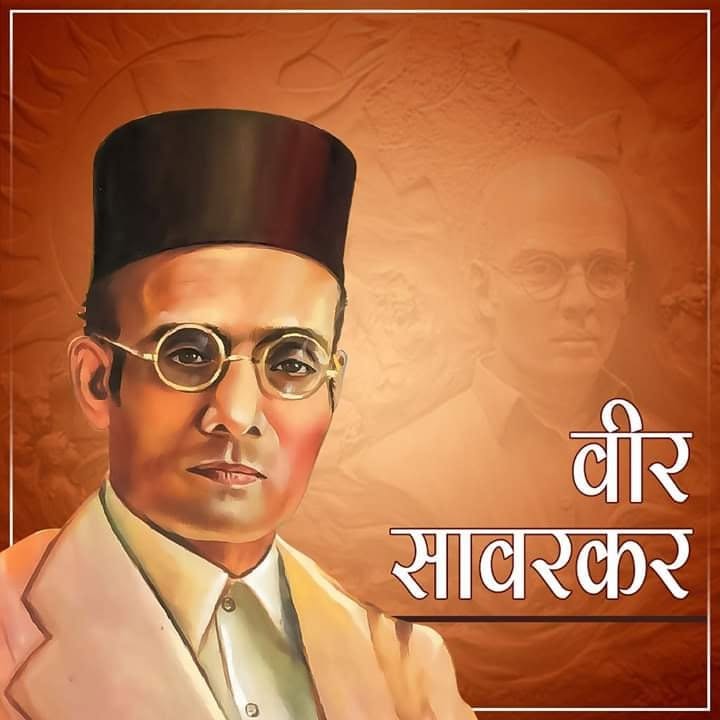
Vinayak Damodar Savarkar, known to millions as Veer Savarkar, remains one of the most fiercely debated and compelling figures in India’s freedom struggle. His life was not a single, linear political journey; it was a continuous “great war” fought on three fronts: against British imperialism, against severe physical and psychological torture, and against the deep-rooted inequalities within Indian society itself.
Born in Bhagur
Born in a village near Nashik, Maharashtra, he showed leadership and anti-colonial sentiments from a very young age.
Founded Abhinav Bharat
Established the secret revolutionary society to mobilize youth for armed resistance.
Arrest & Epic Escape Attempt
Arrested in London and attempted a legendary escape from the SS Morea at the French port of Marseilles.
Exiled to Cellular Jail
Transported to the Andamans to serve a 50-year sentence. He spent 11 years in brutal conditions before being moved to mainland jails.
Conditional Release
Released from prison but interned in Ratnagiri with strict bans on participating in politics. He pivoted to fighting untouchability.
Unconditional Freedom
Freed from all restrictions, he joined the Hindu Mahasabha and heavily influenced the modern Hindutva movement.
Passed Away
Breathed his last in Mumbai after willingly giving up food and water (a practice known as prayopaveshana).
The Intellectual Warrior: London and India House
Savarkar’s war began early. In 1904, while still an undergraduate in Pune, he founded Abhinav Bharat, a secret society dedicated to armed revolution. But it was his move to London in 1906, ostensibly to study law, that elevated his fight to the global stage.
He transformed a student hostel called India House into a bustling, dangerous hub for expatriate revolutionaries. He smuggled arms to India, taught bomb-making manuals, and inspired young fighters like Madan Lal Dhingra.
It was here that he wrote his seminal work, The Indian War of Independence 1857. By meticulously researching British archives and reframing the “1857 Sepoy Mutiny” as India’s first coordinated war for freedom, Savarkar terrified the British establishment. The book was banned across the British Empire before it even reached the printing press, making it an underground sensation among freedom fighters like Bhagat Singh and Subhas Chandra Bose.
The Nightmare of Kalapani
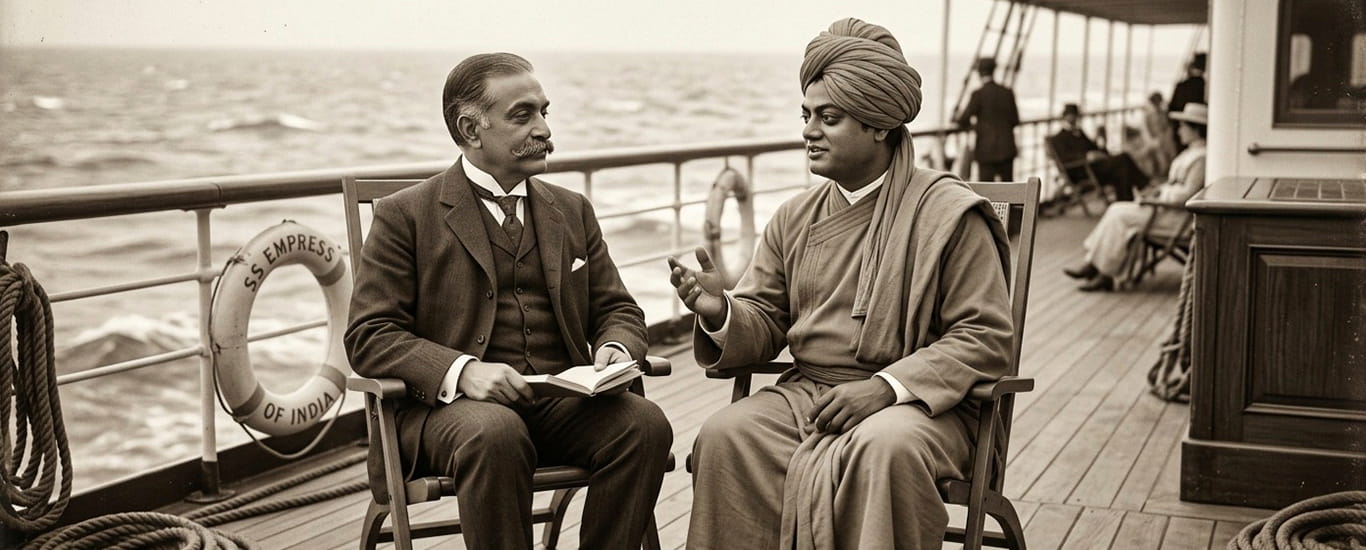
Arrested in 1910 for his revolutionary activities and his suspected role in supplying the weapon that killed a British official in Nashik, Savarkar’s defiance was on full display. While being extradited to India aboard the SS Morea, he attempted a legendary mid-sea escape by squeezing through a toilet porthole and swimming to the French shores of Marseilles. Though illegally arrested by British guards on French soil, he was brought back to India and sentenced to a staggering two consecutive life terms—50 years.
In 1911, he was transported to the notorious Cellular Jail in the Andaman Islands, known as Kalapani. Here, political prisoners were treated worse than violent criminals. For 11 years, he endured:
- Solitary Confinement: Locked in a tiny, dark cell (measuring 13.5 x 7 feet) for months on end.
- The Kolhu (Oil Mill): Yoked like an ox, he was forced to extract 30 pounds of coconut oil daily. Those who failed were flogged relentlessly.
- Starvation & Disease: Fed maggot-infested food, he suffered from dysentery and malaria.
The Clemency Petitions: It was during this period that Savarkar wrote multiple mercy petitions to the British authorities. Historians and critics heavily debate these documents today. Supporters argue that the petitions were a strategic ruse—a tactical retreat common in guerrilla warfare, allowing him to get out of the jail to resume his fight (much like Shivaji Maharaj’s tactical treaties). Detractors argue they were a genuine capitulation. Regardless, he spent over a decade in brutal captivity before being moved to mainland jails in 1921.
The Social Reformer: The Ratnagiri Years
In 1924, Savarkar was released under strict conditions: he was confined to the Ratnagiri district in Maharashtra and completely banned from participating in politics. Stripped of his ability to fight the British, Savarkar turned his formidable intellect against the orthodox elements of Hindu society.
He believed that an India divided by caste could never remain truly free. In Ratnagiri, he waged an aggressive war to dismantle untouchability, aiming to break the Seven Shackles (Bedi) of Hindu society:
| The Shackle | Savarkar’s Reform Target |
| Vedoktabandi | Exclusivity of Vedic texts. He argued that all castes have the right to Vedic rituals. |
| Vyavasayabandi | Prohibition on changing one’s ancestral profession. |
| Sparshabandi | Untouchability. He aggressively campaigned to end this practice. |
| Samudrabandi | The ban on crossing the seas, which was seen as a loss of caste. |
| Shuddhibandi | The ban on re-converting back to Hinduism. |
| Rotibandi | The ban on inter-caste dining. He organized mass community dinners (Sahabhojan) where all castes ate together. |
| Betibandi | The ban on inter-caste marriages, which he strongly advocated for. |
His crowning achievement in this era was the construction of the Patit Pavan Mandir in 1931. Built with the support of Bhagoji Keer, it was one of the first temples in India to allow free entry to all castes, including the untouchables, with a non-Brahmin priest conducting the rituals.
The Ideologue: Formulating ‘Hindutva’
While in prison in 1923, Savarkar wrote his most polarizing and influential text: Hindutva: Who is a Hindu?. He shifted the definition of Hindu identity away from religious dogma and toward cultural and territorial nationalism. According to Savarkar, a Hindu was anyone who considered the Indian subcontinent as both their Pitribhu (Fatherland) and Punyabhu (Holy Land).
This ideology laid the foundational framework for the modern Hindu nationalist movement, making him a deeply venerated figure for some and a highly controversial one for others.
A Literary Giant Unbroken
What often gets lost in the political debates is Savarkar’s literary genius. Denied pen and paper in the Andamans, he composed over 6,000 lines of epic poetry on the walls of his cell using thorns and pebbles. He memorized them and taught them to fellow prisoners, ensuring they survived until he was released. His memoir, Mazi Janmathep (My Transportation for Life), remains one of the most harrowing accounts of the Indian penal system.
Whether viewed as a fiery revolutionary who sacrificed his youth for the nation, a pragmatic tactician, or a polarizing ideologue, Veer Savarkar’s “great war” shaped the trajectory of modern India. He breathed his last on February 26, 1966, having undertaken prayopaveshana (fasting until death), leaving behind a legacy that continues to ignite passionate debate today.